



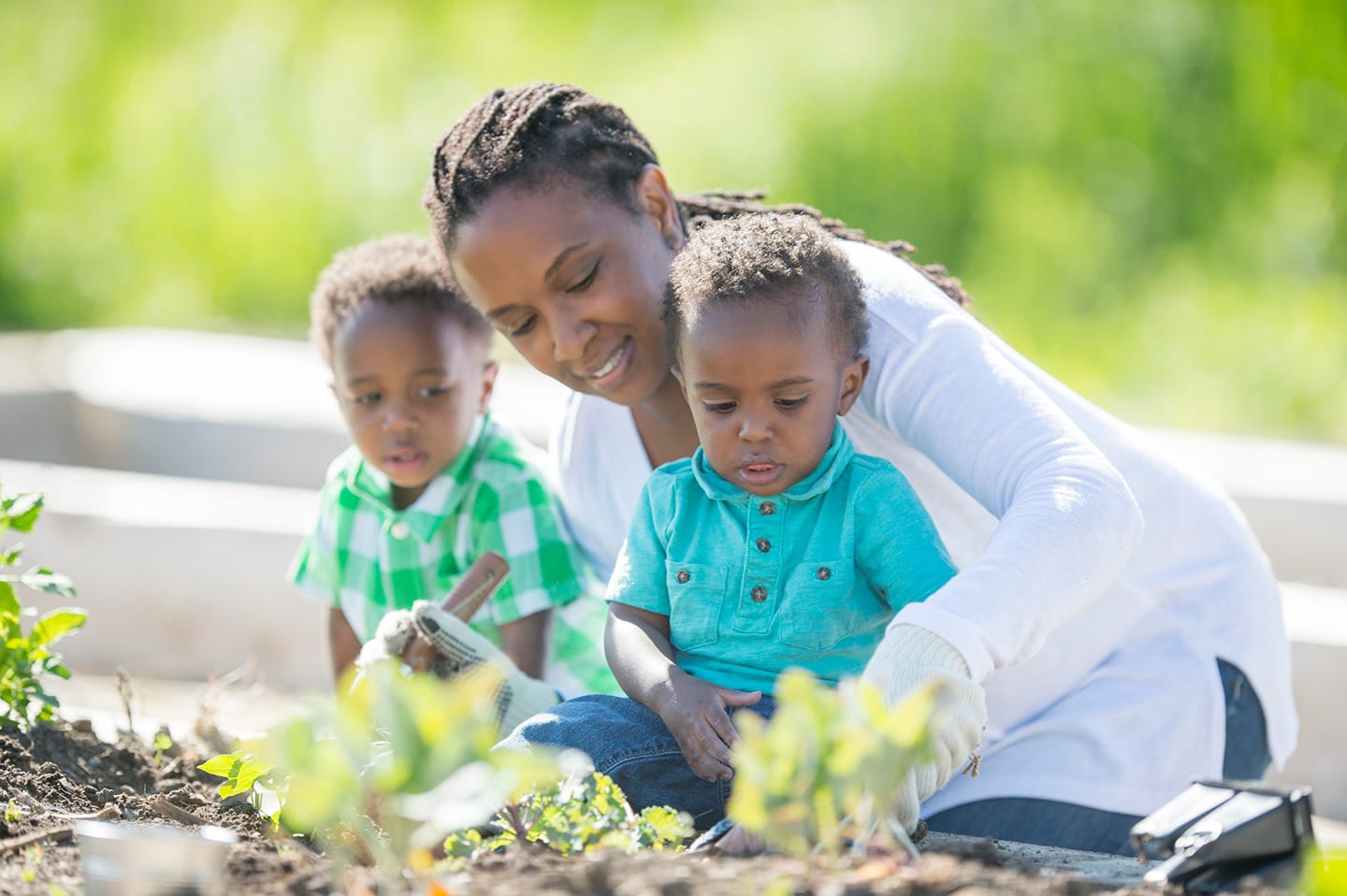
Children curious, like to learn by doing, and love to play in the dirt. Working in a garden, a child can experience the satisfaction that comes from caring for something over time, while observing the cycle of life firsthand.
Gardening gives children a chance to learn an important life skill, one that is overlooked in standard school curriculums. Gardening is also a great way to teach environmental awareness by exploring the workings of nature.

What to plant: top 10 crops for children
Our children were involved with gardening from an early age, and it was gratifying to watch their interest and self-esteem grow as their gardening efforts yielded good results. Although there are many crops suitable for the young gardener, here are our “Top 10”, which are relatively easy to grow, have short growing seasons, and are fun to harvest.
1. Sunflower
A must for a child’s garden, plant just one or two, since they take a lot of room. Sunflowers will sprout in one week, become a small seedling in two weeks, and should be 2′ tall in a month. In eight weeks, the buds will flower revealing hundreds of seed kernels. Be sure to grow ‘confectionery’ sunflowers, the type grown for food. They will dry naturally in the late summer sun; the seeds, rich in protein and iron, can be roasted for snacks. Save a few for next summers’ planting.
2. Lettuce/mescluns
Greens are a quick and reliable crop to give the child fast results, and also a good way to interest kids in salads. Lettuce likes part shade; keep soil moist especially during the first two weeks. The seeds will germinate in 7-10 days; growing season is 40-50 days. You can grow ‘head’ (space 8″ apart) or ‘leaf’ (space 4″ apart) varieties; the leaf varieties will mature sooner, about 30-35 days.
3. Radishes
Radishes bring quick results for the young gardener, germinating in 3-10 days, and with a very short growing season of 20-30 days. They can be planted closely, 4-6″ apart. Plant in cool weather for a mild radish, or hot weather for a hotter radish.
4. Snow peas
Snow peas are a quick-growing early crop, and fun for kids to eat right off the vine. They take about 10 days to germinate and mature in about 60 days. Peas prefer cooler, partially shaded locations in the garden; they should be sown closely, about 1″ apart at most. Snow peas are popular because the pod is edible and since they are a dwarf plant they can be grown without a trellis.
5. Cherry tomatoes
Gotta have ’em! These may be the most fun crop for a child, aside from strawberries. Plant in full sun and use seedlings rather than planting from seed. Put in a 2′ stake alongside each seedling; they need to be tied loosely to stakes as they get taller. Add lots of compost. Water at ground level, trying to keep leaves dry. Growing season is 50-75 days. Cherry tomatoes can also be grown in containers.
6. Nasturtiums
These flowers are easy to grow and yield results quickly, which encourages the young gardener. Nasturtiums bloom about 50 days after the seeds are planted, with orange, yellow and red flowers. They prefer sunny, dry locations and do well in poor soil. Choose the shorter varieties for garden beds. Nasturtiums are also pest resistant, which ensures a successful planting. The flowers are also edible, and can be used to add colour to a fresh garden salad.
7. Bush beans
Fast, easy, high yield and, because they do not grow tall, they are easy for kids to harvest. Bush beans germinate in 4-8 days, and mature in 40-65 days. It’s best to plant a small patch, then another in a few weeks. This will extend the harvest. When choosing seeds, select the “low bush” varieties because these will be easier for children to harvest. Plant closely spaced, about 4″ apart. Grow in direct sun; water the soil but try to keep the leaves dry. Bush beans don’t need poles or trellises to grow.
8. Carrots
Carrot seeds can be sown directly into soil and prefer cooler temperatures. They can be slow to germinate, so be patient. Carrots will mature in about 60 days.The soil should be free of rocks and easy for the carrot to grow ‘down’. Keep well-watered and thin to every 3″ because crowding will produce foliage but no root. Small varieties are recommended for children, as they’re easier to grow and more fun to eat.
9. Potatoes
A ‘never-fail’ crop, you can plant red or white potato varieties with equal success, though red will mature faster. Children seem to favor this variety. Cut seed potatoes into chunks with at least two ‘eyes’ per chunk. Plant in furrows, about 12-15″ apart, with eyes pointing upward. Mound soil up around plant as it grows; harvest when plant collapses.
10. Pumpkin
A ‘must’ for a child’s garden, pumpkins are worth the extra space they take if you have the room. Plant seeds in a small hill; poke three holes in the hill and put one seed in each hole. Seeds will sprout in about one week; after a few days, vine leaves begin to form and creep along the ground. Once there are three pumpkins on the vine, pick off any new blossoms. Pumpkins take 80 – 120 days to harvest: it’s ready when it feels hard on the outside and sounds hollow when tapped. Let an adult supervise the cutting, using shears. Seeds can be dried to eat, or save for future planting. The meat can be used for pies, and the pumpkin for carving.
Other crops our children have tried, with mixed results
Corn
A heavy feeder, corn needs lots of compost or fertilizer, and requires a lot of growing space in relation to the size of the harvest. If the plants aren’t “knee high by the 4th of July”, the ears will be small. In our garden, either the crows got the seedlings, or the plants just never got big enough to yield a good harvest.
Green onions
While these are easy to grow, they’re not all that exciting.
Zucchini
While these are easy, fast, and impressive in size, but it takes a good recipe to get children excited about zucchini.
Strawberries
Children love strawberries, but getting a good harvest can be a struggle with the predators in many areas. We chose the ‘ever-bearing’ strawberry varieties, which have smaller fruit but which bear all summer. Netting the plants from the birds and raccoons, however, was a constant chore which the young children often forgot. Birds became caught in the strawberry netting, which was never fun.
Watermelon
Similar to pumpkins to grow, watermelon have to be well grown to be large and tasty. In our experience, the fruit was smaller than expected and not very sweet. We prefer to give the space to pumpkins.

Tips for gardening with children
Give them their own garden beds
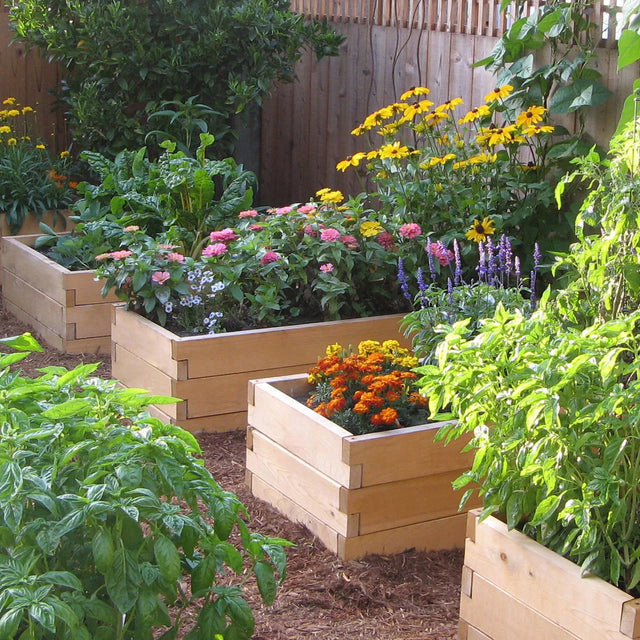
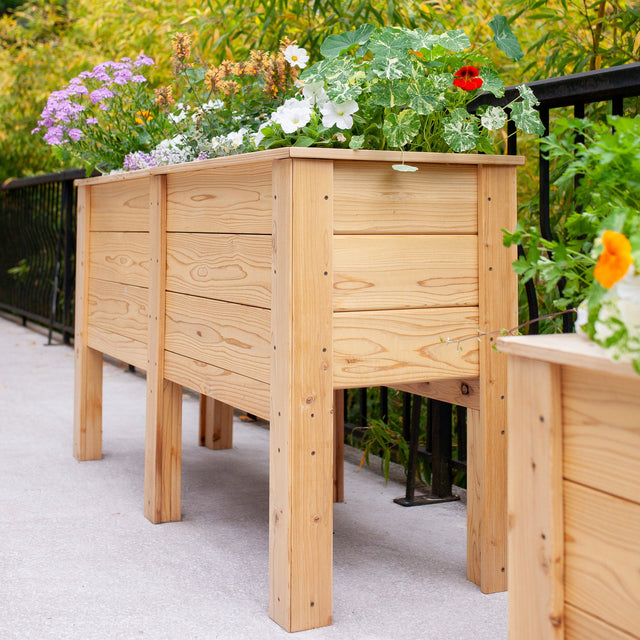
Whether you use raised beds, containers, or ground plots, be sure to give each child his or her own separate plot. Keep it small, very small for young kids. Put their plots right in the middle of the action, with the best soil and light. This will help set them up for success.
Reuse the sandbox
If your children have grown past their sandbox years, consider converting the old sandbox to a garden bed. This gives the child continued ‘ownership’ of a familiar space and encourages a sense of responsibility for the gardening project. Of course, a productive garden bed needs to be in good sunlight, and soil should be free of tree roots. It may be necessary to relocate the sandbox if growing conditions are less than ideal.
Give them serious tools
Cheap plastic child’s gardening tools are worse than no tools at all; they break easily and frustrate the user. It can be hard to locate good tools for kids, especially work gloves that fit a small hand. With some garden tools, like a hoe or spade, you can easily saw the handle shorter. Let them use your tools if need be; in this way you’re acknowledging the importance of the work they’re doing.
Engage them through the entire process
Children learn better when they understand the context of their activity. They will learn that gardening can be fun, but far more than idle play; they are contributing to the family well-being. Besides planting and nurturing their garden beds, be sure they alone do the harvesting and preparation of their crop for the table, no matter how modest the offering.
Start from seeds
While it’s a convenient shortcut to buy starters, children will learn more by seeing the growing process as it begins, from seed. The care given to sprouting seeds and nurturing the young seedling are a valuable part of the gardening experience.
Seeds will need to be started indoors in a warm room. Once sprouted they can be transplanted into pots until ready to set out, or they can be placed into a cold frame which is set on top of the garden bed.
Cheat a little
Depending on the age of the child, you may need to help out a little ‘behind the scenes’. Not every garden task is pleasant, and the child may not be ready at all times for all chores. You may need to go out in the evening to pick a few slugs off the lettuce, or be the one to run out and move the sprinkler. They don’t have to know about every little help you offer: the child’s ‘ownership’ of the plot is the main thing.
When all else fails, make a scarecrow
The best time to engage children in gardening is when they’re in the mood for this activity. If their attention wanes, or the garden tasks become boring, let them build a scarecrow. This activity is still a contribution to the gardening effort and adds another layer of interest to the garden scene. It also reminds the child of the importance of the garden crops.
Show off their work
When giving ‘garden tours’ to friends, be sure to point out the children’s beds. Take a photo of their harvest and send it to the grandparents. The attention given to their work is the best motivator for children to stay involved with a project.
Resources for young gardeners
- The Great Plant Escape: This is a great primer on gardening written for children; follow the clues and learn the plant growing basics.
- My First Garden: A wonderful site from the University of Illinois. All you need to know about getting started with your first garden in a fun and kid-friendly way.
- The Adventure of Herman the Worm: Activities, games, and info.
- The Kids Garden: Creative children’s gardening ideas from the UK