






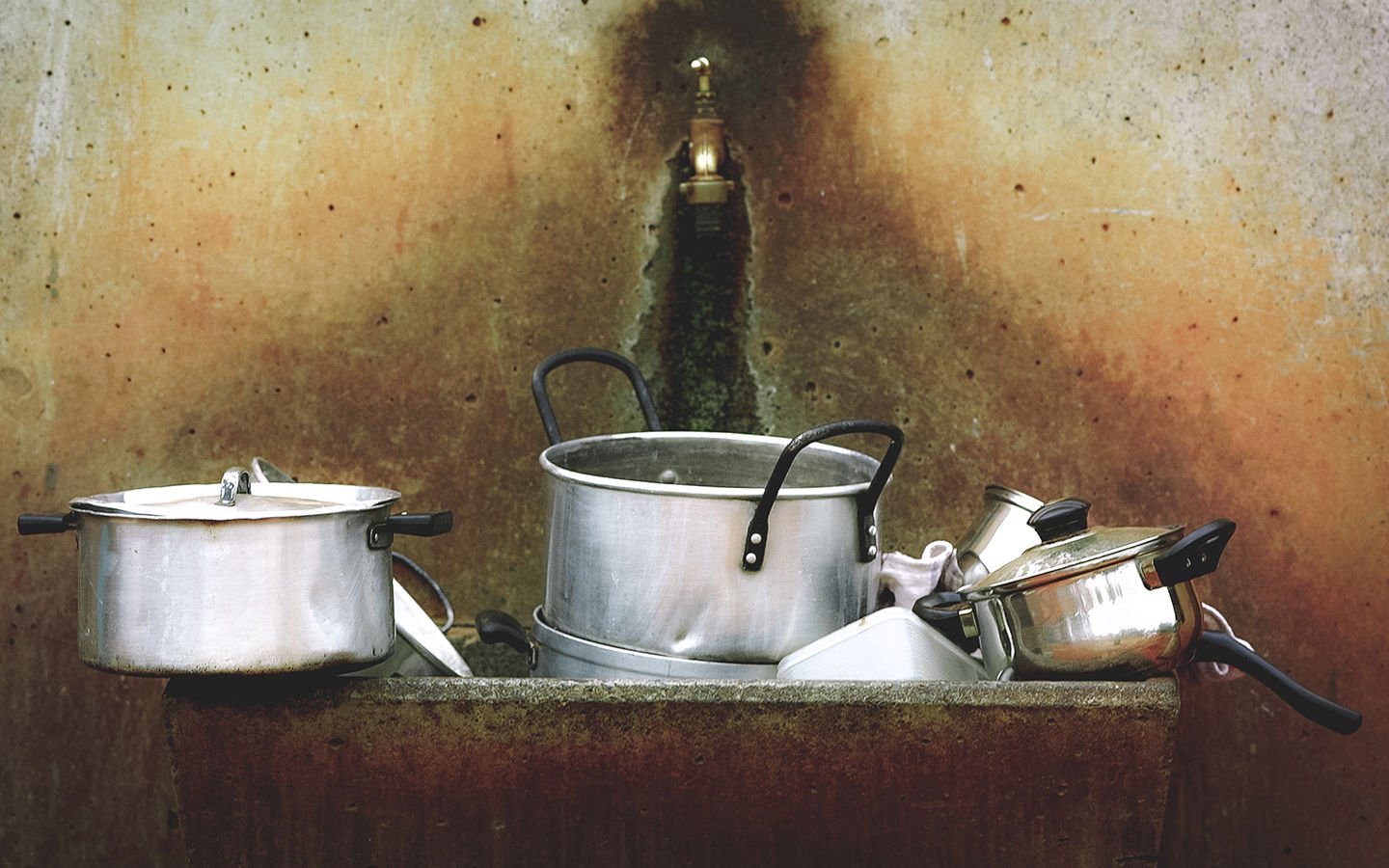
There are potential risks in some cookware materials. Aluminum and Teflon-lined pots, pans and bakeware are safest when kept in good condition and used properly. Stainless steel, enameled or well-seasoned cast iron and porcelain cookware are best.
Stainless steel
Mixing steel with chromium and nickel (18/8 stainless steel is 18% chromium and 8% nickel while 18/10 has 10% nickel) produces a corrosion resistant steel that is both hard wearing and easy to clean. Stainless steel cookware is considered one of the best and safest choices in cookware.
Suggestion:
Avoid using abrasive materials when cleaning stainless steel cookware – Stainless steel cookware can become a problem if an abrasive material is used frequently to clean it thereby releasing small amounts of chromium and nickel. Nickel is not poisonous in small quantities but it can cause an allergic reaction. People with nickel allergies should avoid cooking with stainless steel cookware.
Aluminum
Plain aluminum cookware is low-cost, light-weight, and thermally responsive – but aluminum is reactive. Foods cooked in aluminum can react with the metal to form aluminum salts associated with impaired visual motor coordination and Alzheimer’s disease; however there is no definite link proven. More than half of all cookware sold today is made of aluminum.
Suggestions:
- Keep aluminum cookware on good condition – When cooking with aluminum pots, the more pitted and worn out the pot, the greater amount of aluminum will be absorbed.
- Minimize food storage time in aluminum – The longer food is cooked or stored in aluminum, the greater the amount that gets into food.
- Avoid cooking highly acidic foods in aluminum – Aluminum cookware manufacturers warn that storing highly acidic or salty foods such as tomato sauce, rhubarb, or sauerkraut in aluminum pots may cause more aluminum than usual to enter the food.
Anodized aluminum
Anondized aluminum has been treated to develop an aluminum oxide (extremely hard and non-reactive) coating on the surface of the cookware. Commercial Aluminum Company, the manufacturer of Calphalon, a best-selling brand of anodized aluminum cookware, claims that a final stage in the anodization process seals the aluminum, preventing any leaching into food. Anodized aluminum cookware doesn’t react to acidic foods, so these pots and pans are good choices for cooking rhubarb and sauces with tomato, wine, and lemon juice.

Copper with stainless steel lining
Copper exterior requires more care but imparts the utensil with copper’s excellent thermal properties. Stainless steel/copper cookware is considered among the best and safest choices in cookware.
Copper
Copper pans are often coated with another metal that prevents the copper from coming into contact with food. Small amounts of the coating can be dissolved by food, especially acidic food, when cooked or stored for long periods.
Suggestions:
- Not for people with nickel allergies – Nickel is one of the metals used in coating, so anyone allergic to nickel should avoid nickel-coated cookware.
- Avoid abrasive materials when cleaning – Coated copper cookware can lose its protective layer if scoured.
- Avoid uncoated copperware – Don’t use badly scratched or uncoated copper cookware to cook or store food.
Teflon and Silverstone
Non-stick finishes like Teflon and Silverstone scratch easily and may release little bits of inert plastic into the food when cooked, as well as toxic fumes over high heat. DuPont studies show that Teflon offgases toxic particulates at 446°F. At 680°F Teflon pans release at least six toxic gases, including two carcinogens. DuPont acknowledges that the fumes can sicken people, a condition called “polymer fume fever.”
A study by Environmental Working Group, in collaboration with Commonweal in 2005 found chemicals in the umbilical cord blood of US-born infants including the Teflon chemical PFOA Similarly, researchers at John Hopkins Hospital, who released findings in 2006, found PFOA the Teflon chemical, in umbilical cord blood in 99% of 300 newborns tested. The Canadian government is introducing legislation to ban PFOA. more info on teflon
Suggestions:
- Consider replacing your Teflon cookware
- Do not overheat Teflon cookware – Nonstick coatings are a risk is if they are over-heated. This can happen if an empty pan is left on a burner. In this case, the fumes released can be irritating or hazardous. If you plan to continue using Teflon, only cook foods at low heat.
- Keep pet birds away when cooking with Teflon – Households with pet birds should be aware that Teflon fumes pose a hazard to birds.

Cast iron
Plain cast-iron is thick and dense cookware for unparalleled heat capacity. The thickness also results in even heating; however, the thickness also requires more time (and energy) to heat up. Cooking with cast iron also provides a source of an important nutrient.
Some nutritionists suggest that foods cooked in unglazed cast iron contain twice or more the amount of iron they would contain otherwise. Cast-iron utensils, although considered very safe to use, should be handled differently from other utensils.
Suggestions:
- Keep cookware well-coated – To prevent rust damage, the inside of cast iron cookware should be coated frequently with unsalted cooking oil.
- Use detergents sparingly – It should not be washed with strong detergents or scoured and should be wiped dry immediately after rinsing.
Ceramic, enameled and glass
Cookware made properly of enamel-coated iron and steel is safe to cook with, according to the FDA’s Center for Food Safety and Applied Nutrition. Because of the high firing temperatures required, lead which could present a safety concern is not used in the enamel for this cookware. Some older enamel cookware contained the potentially toxic substance cadmium, which was sometimes contained in the red, yellow and orange pigments used to color the interior of enamel cookware. Cadmium was used mostly by foreign manufacturers. But manufacturers have discontinued its use, and consumers today are not in danger of cadmium poisoning from enamelware marketed today.
Some countries do not have strict lead and cadmium limits. If you bring in glazed ceramic cookware from abroad, be aware that it may not meet permitted levels for lead and cadmium.

Crock-pots and terra cotta
Considered safe for cooking. However, lead has been used in some glazes for slow-cooking pots (crock-pots). But, in tests done in 1987, FDA found that the amount of lead that leached into food from these pots did not exceed FDA standards. As a general rule, terra cotta cookware without lead glaze is the best choice.
To ensure safety in using pottery dishes or cookware, ensure that there is a label that reads, “Safe for food use.” It is also best to avoid using pottery items such as pitchers or mugs from Mexico or Latin America due to the potential high levels of lead.
Plastic
Using plastic containers and wrap for anything other than their original purpose can cause health problems. Don’t use plastic bowls or wrap in the microwave unless they are labelled as microwave safe. If you reuse items for storage, such as dairy product containers, let the food cool before storing, then refrigerate it immediately. Never heat or store food in plastic containers that were not intended for food.

Bamboo
Bamboo steamers and paddles as well as wooden spoons, utensils, chopsticks and crockery are non-reactive and considered to have no harmful effects on food during cooking or meal preparation. Bamboo steamers are also dishwasher safe. For food preparation, bamboo cutting boards are a sustainable alternative to traditional wooden cutting boards. Bamboo is an earth-friendly, renewable resource, and one of the fastest growing resources on earth. It is not a wood but a type of grass that needs no replanting. It grows rapidly without chemical fertilizers, and can be harvested in just 3-5 years.
Cooking and storing tips to reduce toxicity
- Store your food in glass, not plastic
- Do not use Styrofoam cups for drinking (especially hot drinks!)
- When cooking, keep your kitchen well ventilated. Turn on your oven fan or open a window.
- Plastic cookware handles that get too hot may emit toxic fumes. Choose cookware with handles that stay cool on the stovetop for a reasonable amount of time but are oven-safe (e.g. glass/ceramic or stainless steel tubular).
- Never use scouring powders, scouring pads, or other abrasives on ‘microwave safe’ cookware.
- Avoid eating leftover food that has been stored for more than one day.